

Municipal Market of Tavernes de la Valldigna
The Municipal Market of Tavernes de la Valldigna is not just a place to buy fresh produce: it is part of the city’s everyday history. Its stalls, aisles and entrances show how Tavernes organised supplies, small local trade and daily encounters between neighbours for decades.
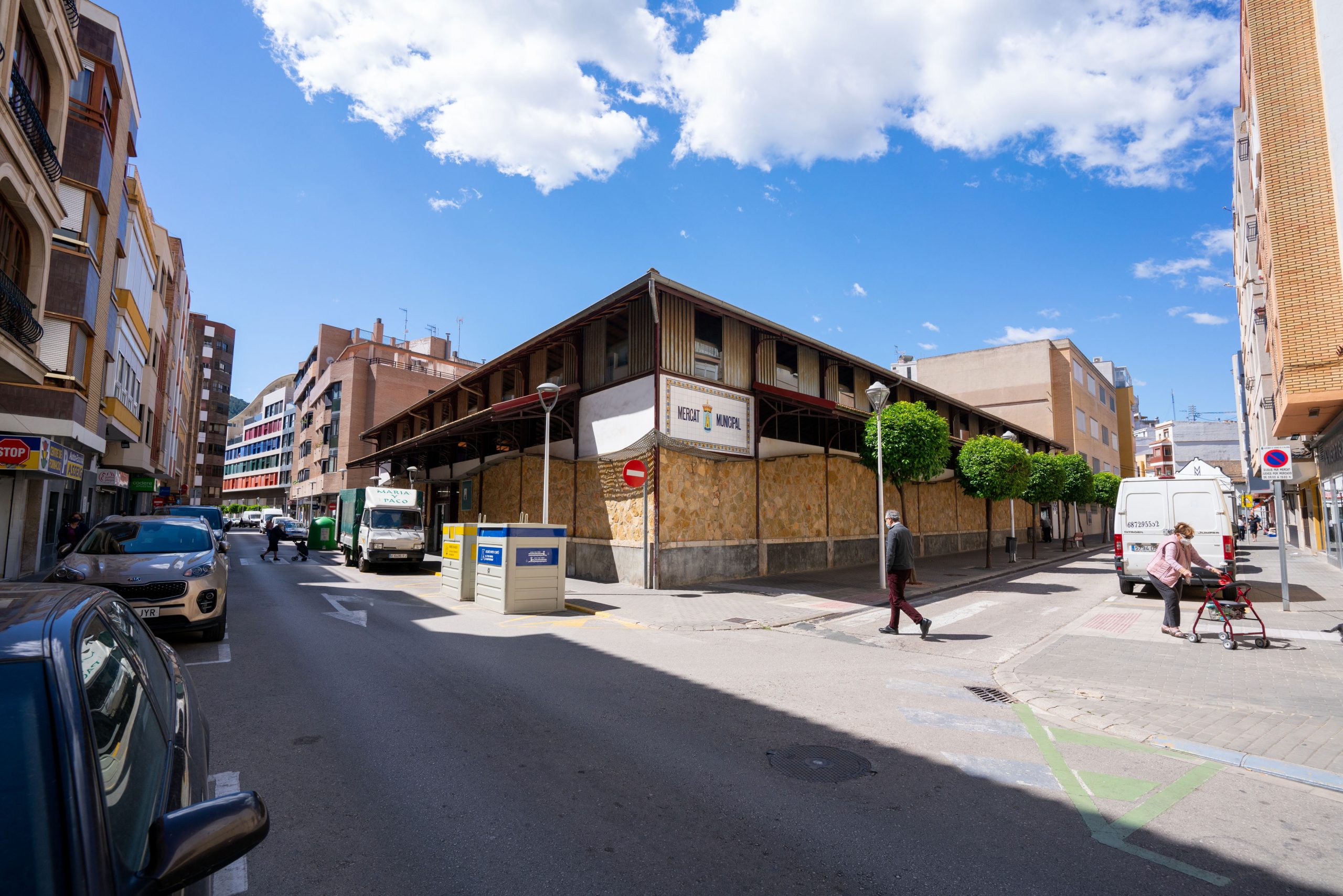
Located on Ramón y Cajal Street, the market connects the agricultural and commercial city with present-day Tavernes. Its counters tell a close, familiar story: local produce, conversations with stallholders and the evolution of a building that has adapted over time without losing its social role.
 Municipal Market
What to know before visiting
The tourist value of the market lies in its history of use: a building created to organise daily sales, improve trading conditions and bring local economic life together in one place.
 Ramón y Cajal Street
A mid-20th-century market
The Municipal Market, as we know it today, took shape in 1953, during the mayoralty of Amado Vila Giner. At that time, the old railings or open enclosures were replaced by masonry walls about two metres high, a change that gave the building a more solid appearance and made it better suited to daily trading.
This detail is important because it places the market within a period of urban modernisation. Tavernes needed more organised spaces for supplies, hygiene and small local trade, and the covered market fulfilled that role: bringing stalls together, protecting the activity and turning everyday shopping into a stable service for the city.
The market’s tourist story is not about monumentality, but about its role as a public-service building: a place where the city recognised itself, bought, talked and organised part of its daily economy.
From traditional supplies to the current market
The market helps explain the transition between a local economy closely linked to the countryside, proximity shopping and the stable commerce that continues today in the town centre.
The city that bought, sold and came together
In a city like Tavernes, the market cannot be separated from the market garden, traditional trades and everyday shopping. Fruit, vegetables, meat, fish, bread, herbal products, cold meats or the café are not just services: they are a way of reading the relationship between production, food and social life.
That is why the Municipal Market has value within a route of emblematic buildings. Alongside religious, defensive or institutional buildings, this space represents useful architecture: the kind that serves to buy, supply, work and keep small local commerce alive.
- Fresh produce and proximity commerce.
- Traditional stalls with direct, personal service.
- A link with the agricultural and gastronomic life of Tavernes.
- A meeting place in the town centre.
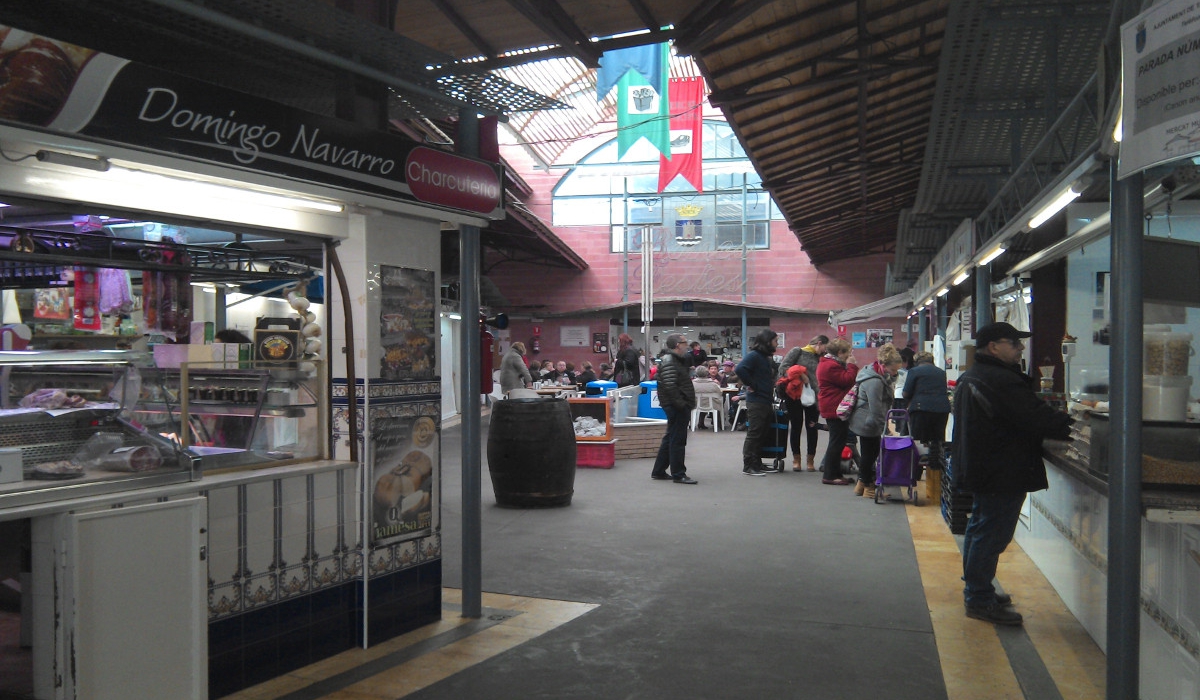 Market in activity
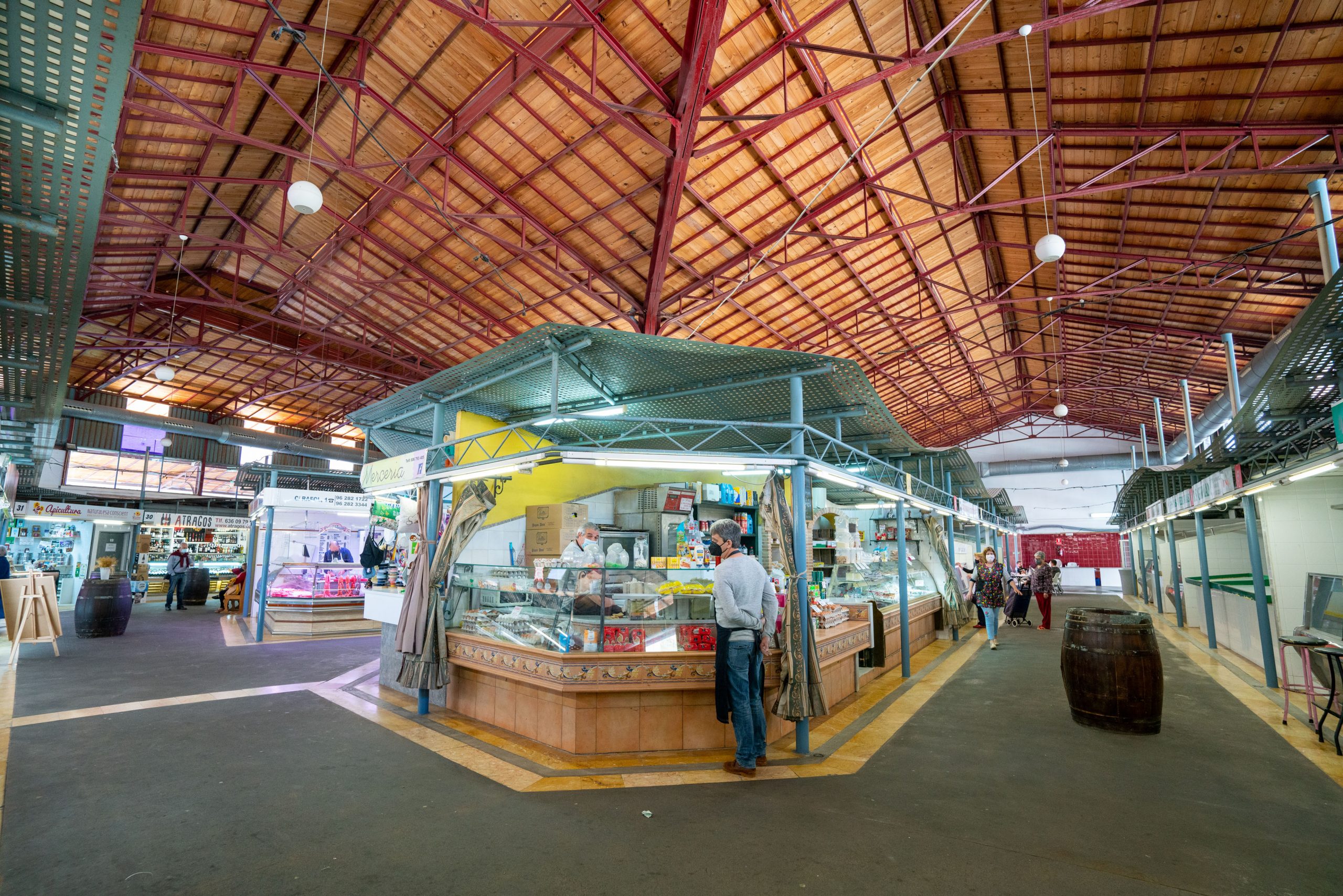 Market interior
A building designed to organise trading
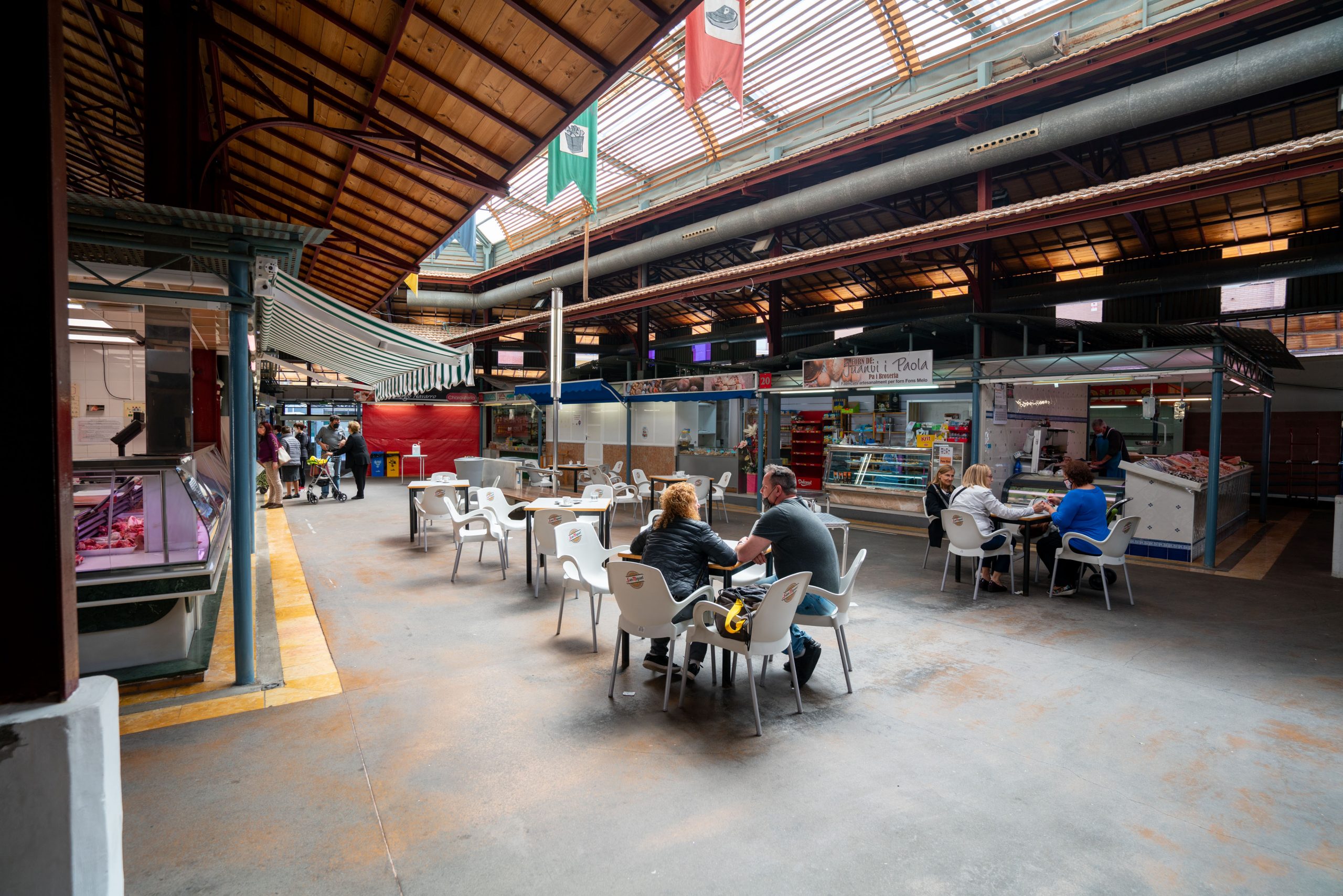
The architecture of the market responds to a practical need: to cover, organise and facilitate commercial activity. Its aisles, stalls, entrances and roof structure make the building easy to walk through, with a clear reading of the interior space.
The 1953 change, replacing old enclosures with masonry walls, can be understood as an improvement in stability, protection and functionality. The market ceased to be just an open sales space and became consolidated as an urban facility.
The visit gains meaning when the building is seen as a piece of social history: it was not created to be contemplated, but to be used every day.
A market that has adapted over time
As a living building, the Municipal Market has needed improvements in order to continue fulfilling its role. In 2011, work was carried out to adapt the space to regulations, improve health conditions, reinforce energy efficiency and make the exterior surroundings safer.
These interventions explain another part of its history: the market did not remain frozen in 1953, but has adjusted to the needs of stallholders, shoppers and visitors. That continuity is precisely what gives it tourist value: it remains useful, recognisable and close to local life.
On an urban route, the Municipal Market tells a different story: the story of heritage that continues to work every day.
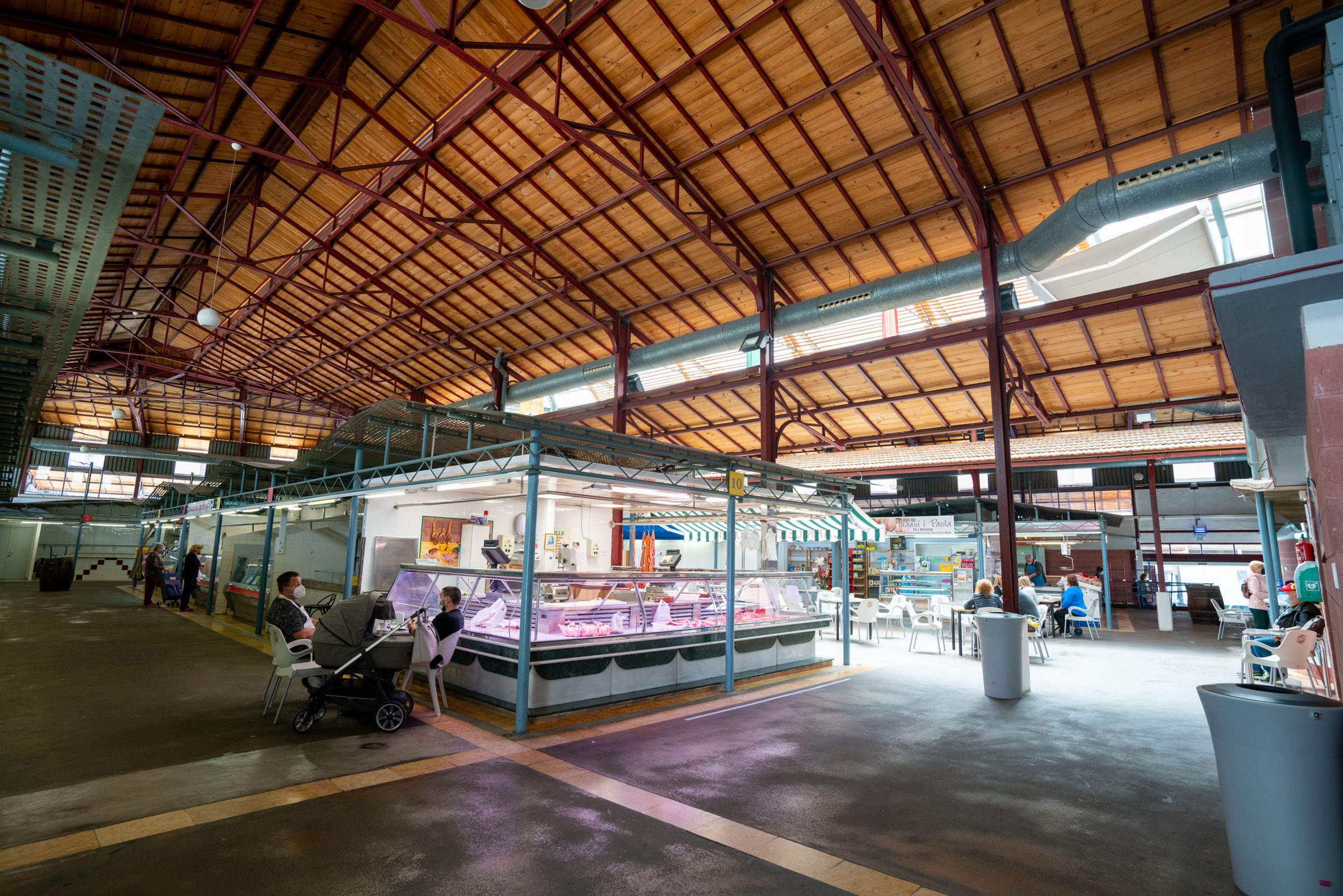 Café and stalls
How to include it in a route through Tavernes
The Municipal Market fits especially well within an urban route through the centre. It can be combined with the City Council, the Church of Saint Peter, the Church of Saint Joseph, the House of Culture and other emblematic buildings to balance heritage, commerce and everyday life.
The visit is most interesting in the morning, when the stalls are active and the building keeps its everyday rhythm of shopping, conversation and local commerce.
Keep discovering Tavernes de la Valldigna
Complete your visit with the main sections of the tourist website: ideas for organising your day, urban heritage, history and route planning.

Things to do in Tavernes
Ideas for combining heritage, beach, nature, culture and plans during your visit.
See things to do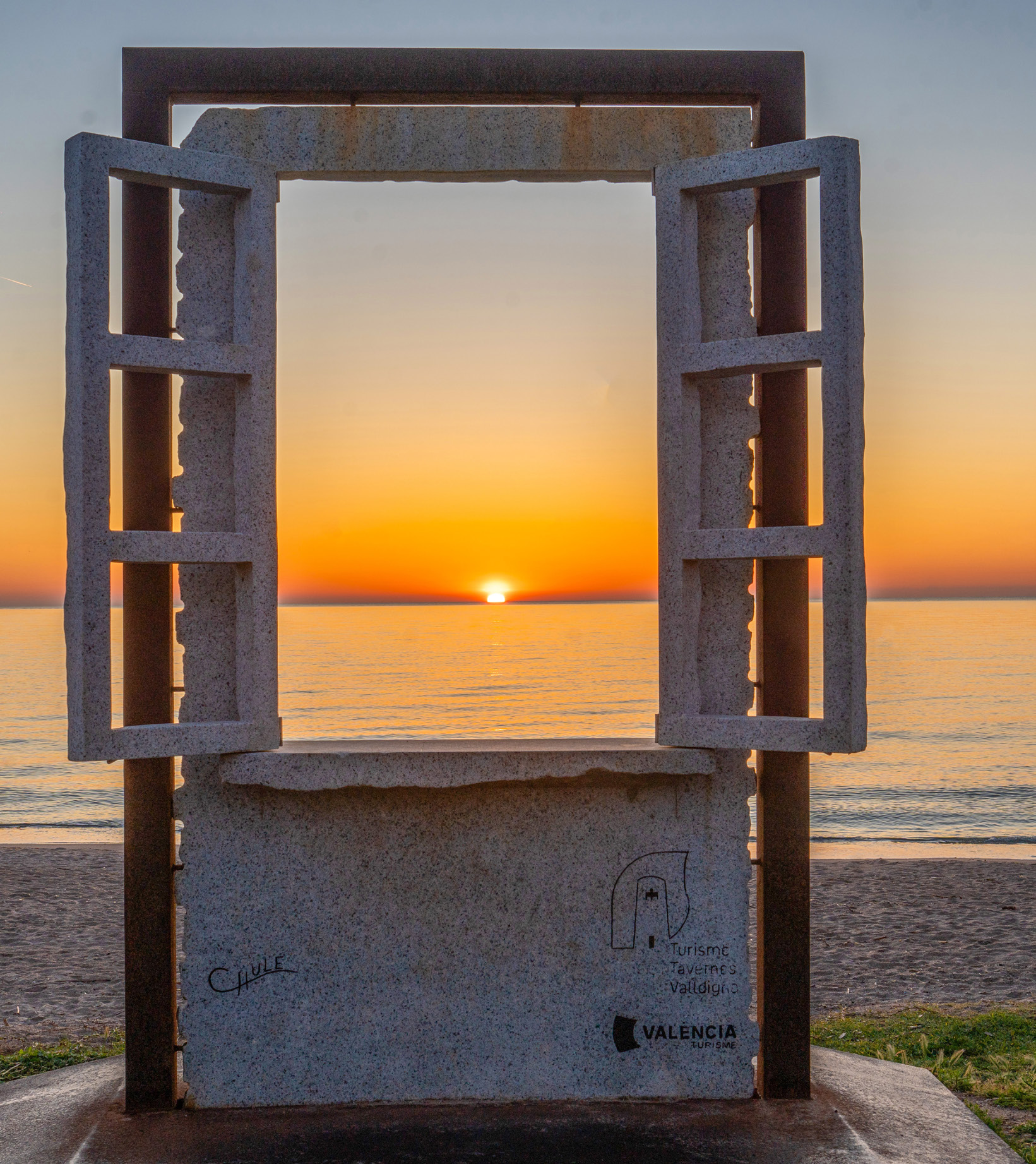
Travel planner
Organise a tailor-made route with heritage, beach, nature, gastronomy and culture.
Plan your visit
Emblematic buildings
The starting point for visiting churches, public buildings, cultural spaces and urban heritage.
See buildings
History of Tavernes
A look at the origins, urban evolution and historical memory of the city.
See historyImages to look at the Municipal Market in detail
The gallery remains at the end of the page and brings together the exterior, entrance, aisles, stalls and interior atmosphere of the market as a visual close to the route.
Ramón y Cajal Street
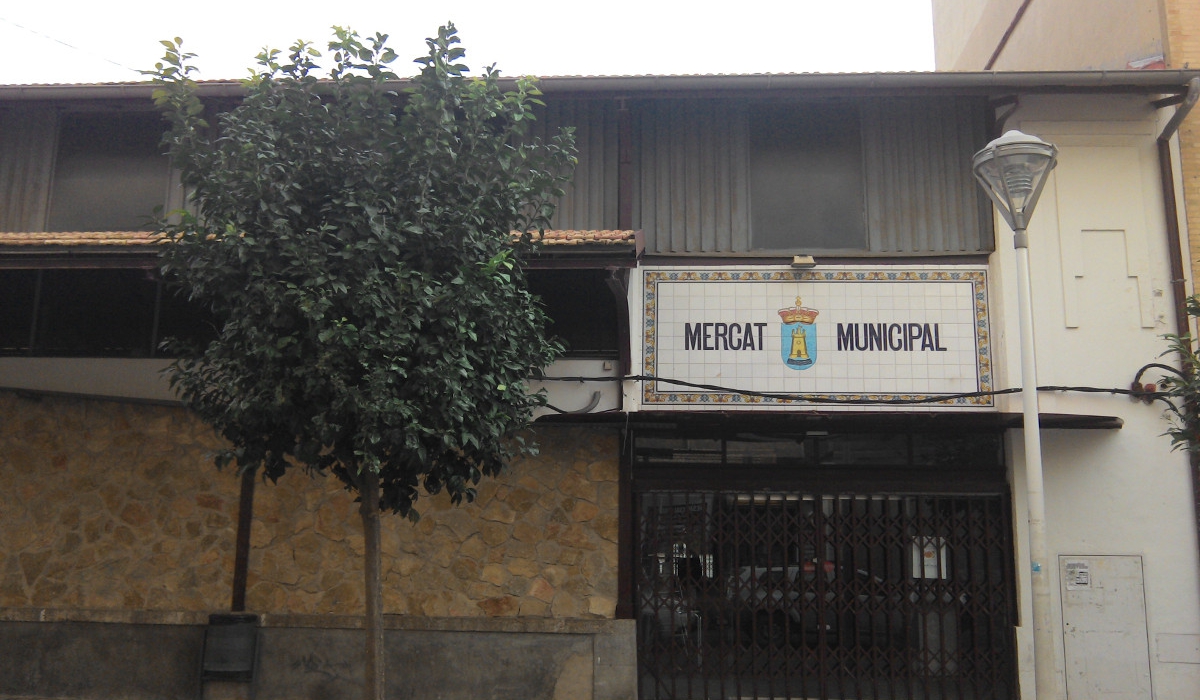
The entrance places the market in the town centre and marks the main access to the building.
The building
The exterior view shows the relationship between the market, the surrounding streets and nearby shops.
Market in activity
Daily shopping, stalls and conversation give meaning to the space.
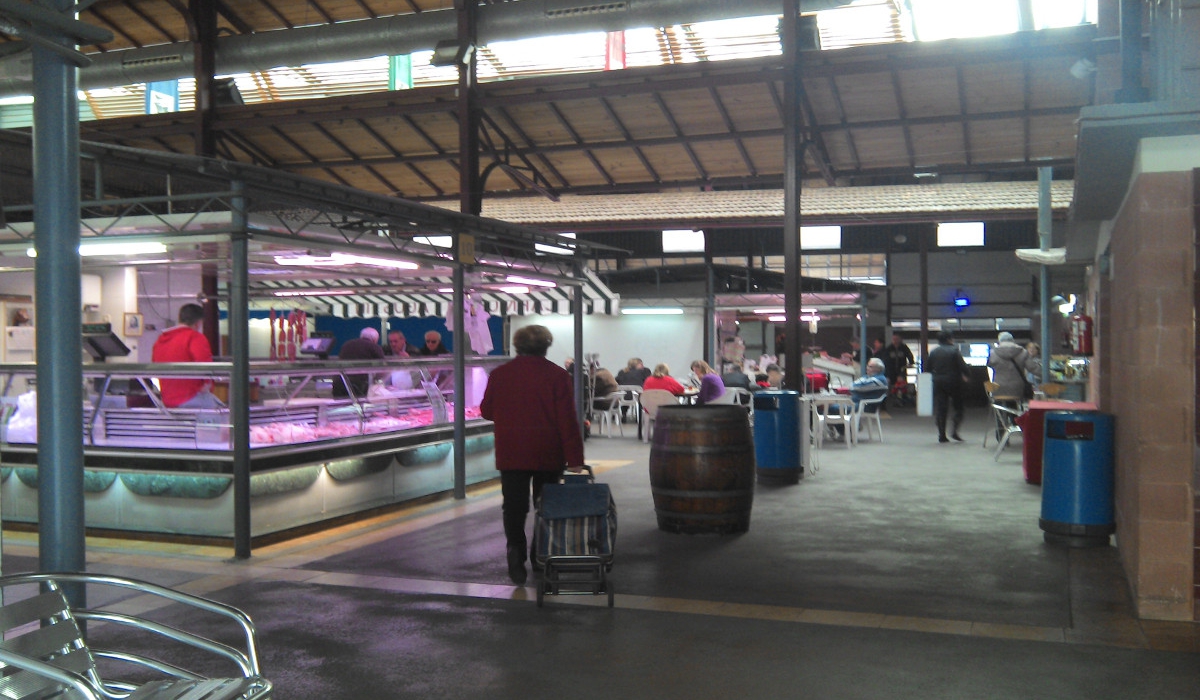
Aisles and stalls
The interior route makes it possible to observe the layout of the stalls and the roof structure.
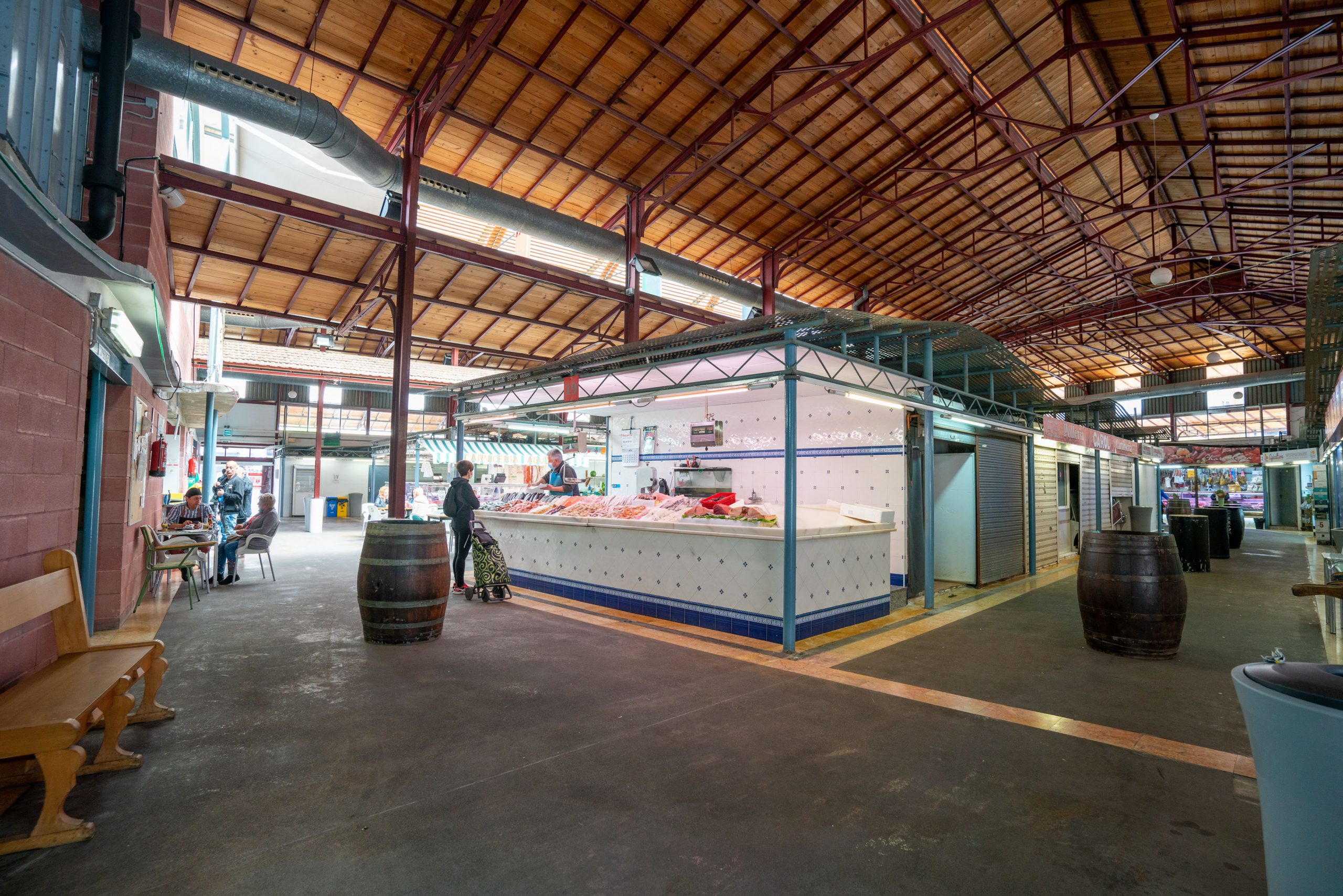
Central area
The roof and spacious interior make movement and commercial activity easier.
Local stalls
The stalls are the heart of the market and explain its daily economic function.
Café
The café turns the visit into a moment of rest within the urban route.
Market life
The market also works as a place for meeting and everyday social life.